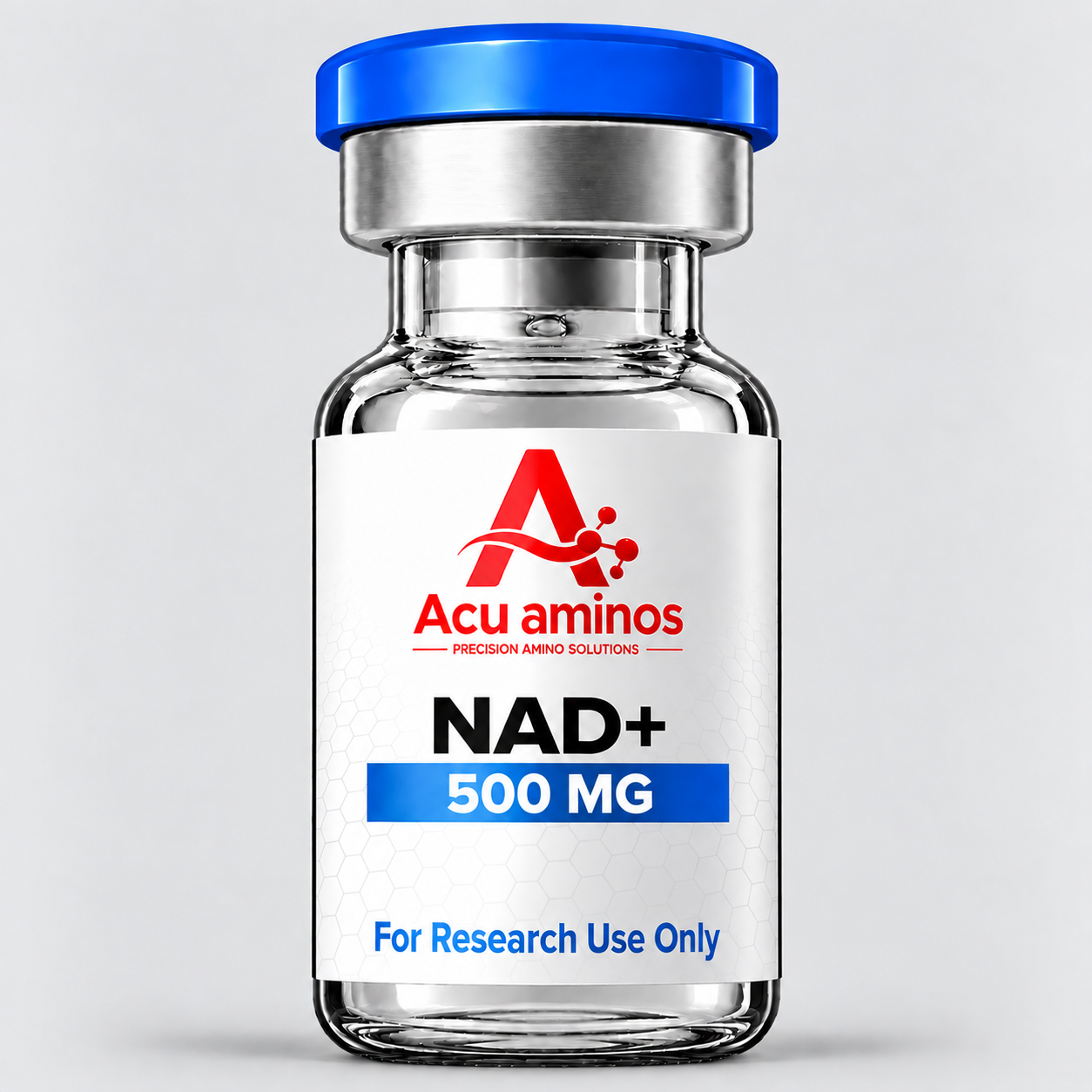
NAD+ 1000mg
$94.99
Nicotinamide adenine dinucleotide (oxidized form), 1000 mg lyophilized. The central redox coenzyme of cellular metabolism and the substrate for sirtuins, PARPs and CD38, supplied as a reference material for mitochondrial, aging and enzymology research. ≥99% purity. Research use only.
Overview
NAD+ (nicotinamide adenine dinucleotide) is a dinucleotide coenzyme present in every living cell. It cycles between its oxidized (NAD+) and reduced (NADH) forms to carry electrons in glycolysis, the TCA cycle and oxidative phosphorylation, and it also serves as a consumable substrate for signaling enzymes including sirtuins, poly(ADP-ribose) polymerases and CD38. Declining cellular NAD+ levels with age are a major topic of current longevity research.
Acu Aminos supplies NAD+ as a 1000 mg lyophilized powder for laboratory biochemistry and cell-culture research. Although not a peptide, it is stocked because it is used alongside peptides in mitochondrial and metabolic studies.
Chemistry & specifications
NAD+ consists of two nucleotides, nicotinamide riboside monophosphate and adenosine monophosphate, joined through their phosphate groups. The positively charged nicotinamide ring is the redox-active center: it accepts a hydride ion to form NADH. NAD+ is hygroscopic and degrades in solution, particularly at alkaline pH and elevated temperature, so the lyophilized solid should be kept dry and prepared fresh for use.
| Compound | β-Nicotinamide adenine dinucleotide (oxidized) |
|---|---|
| Molecular formula | C21H27N7O14P2 |
| Molecular weight | 663.43 g/mol |
| CAS | 53-84-9 |
| Net content | 1000 mg per vial |
| Form | Lyophilized powder |
| Purity | ≥99% (HPLC) |
| Appearance | White to off-white powder |
| Solubility | Water soluble |
| Storage | Lyophilized: −20 °C long term, 2–8 °C short term. Protect from light and moisture. Hygroscopic; keep tightly sealed. |
Cellular structure & mechanism of action
As a redox carrier, NAD+ links catabolic pathways to the mitochondrial electron-transport chain, where NADH donates electrons to complex I. As a signaling substrate, NAD+ is cleaved by sirtuins (SIRT1–7) during protein deacetylation, by PARP enzymes during DNA-damage repair, and by CD38/CD157 to produce cyclic ADP-ribose. Because these enzymes compete for the same pool, NAD+ availability is studied as a regulator of mitochondrial biogenesis, DNA repair, circadian rhythm and inflammatory signaling in cell and animal models.
Research applications
- Sirtuin, PARP and CD38 enzyme kinetics and inhibitor screening
- NAD+/NADH ratio and redox-state assays
- Mitochondrial respiration and complex I studies
- Aging, senescence and DNA-repair cell models
- Analytical reference standard for HPLC / LC-MS methods
Selected references
- Covarrubias AJ, Perrone R, Grozio A, Verdin E. NAD+ metabolism and its roles in cellular processes during ageing. Nat Rev Mol Cell Biol. 2021;22:119–141.
- Yoshino J, Baur JA, Imai S. NAD+ intermediates: the biology and therapeutic potential of NMN and NR. Cell Metab. 2018;27(3):513–528.
- Cantó C, Menzies KJ, Auwerx J. NAD+ metabolism and the control of energy homeostasis: a balancing act between mitochondria and the nucleus. Cell Metab. 2015;22(1):31–53.
References are provided to help researchers locate primary literature. Acu Aminos makes no claims about the safety or efficacy of any compound in humans or animals.
What are research peptides?
Structure
Peptides are chains of amino acids joined by amide (peptide) bonds. Short chains of 2 to roughly 50 residues are called peptides; longer chains fold into proteins. Sequence, chain length and terminal modifications define how a peptide behaves.
Synthesis & purity
Research peptides are built by solid-phase peptide synthesis, cleaved from the resin, purified by reverse-phase HPLC and lyophilized to a stable powder. Purity is reported as the HPLC area percentage of the target peak; identity is confirmed by mass spectrometry.
Laboratory use
In the lab, peptides serve as receptor ligands, enzyme substrates, signaling probes and reference standards in cell-culture, biochemical and analytical studies. Our products are supplied exclusively for these in-vitro research applications.
Handling & storage
Lyophilized peptides should be kept sealed, protected from light and moisture, and stored refrigerated or frozen for long-term stability. Allow vials to reach room temperature before opening to prevent condensation.
All information on this page is provided for educational and research reference only and does not constitute medical advice or a recommendation for use in humans or animals.
Related research peptides
-
99% Purity
 Mitochondrial & Longevity
MOTS-c 10mg
10 mg · Mitochondrial-derived 16-aa peptide · ≥99% purity$99.99In stock -
99% Purity
 Mitochondrial & Longevity
SS-31 10mg
10 mg · Mitochondria-targeted tetrapeptide · ≥99% purity$74.99In stock -
99% Purity
 Growth Hormone Secretagogues
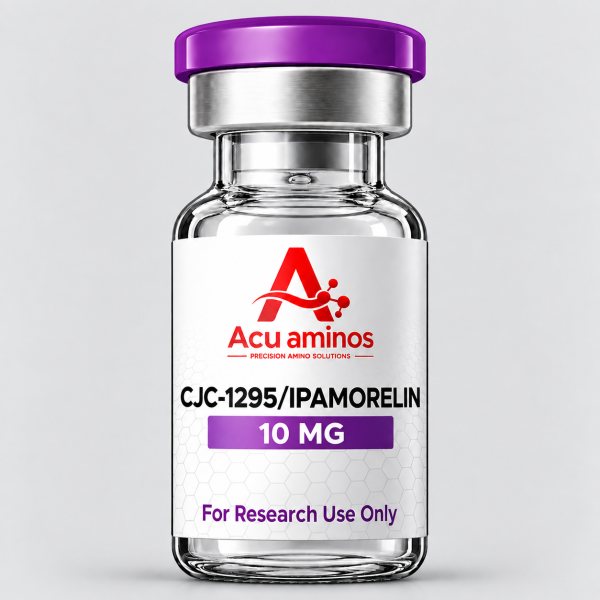
CJC-1295 / Ipamorelin 10mg
10 mg · CJC-1295 (no DAC) 5 mg + Ipamorelin 5 mg · ≥99% purity$84.99In stock -
99% Purity
 Immune & Neuro Peptides
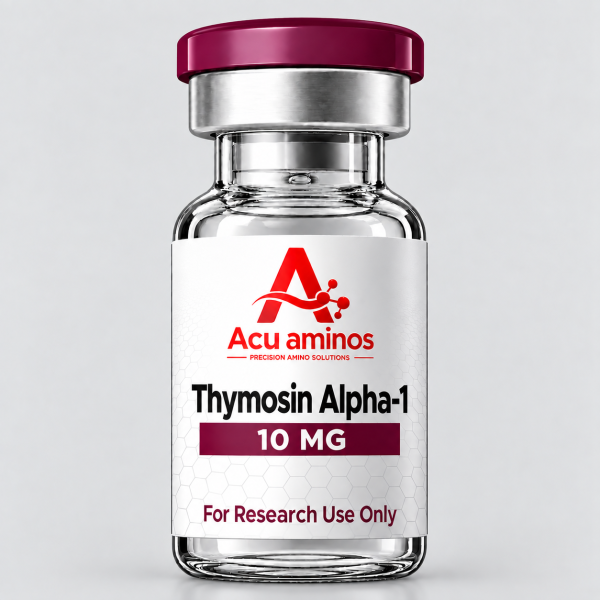
Thymosin Alpha-1 10mg
10 mg · 28-aa acetylated thymic peptide · ≥99% purity$99.99In stock