BPC-157
From $52.99
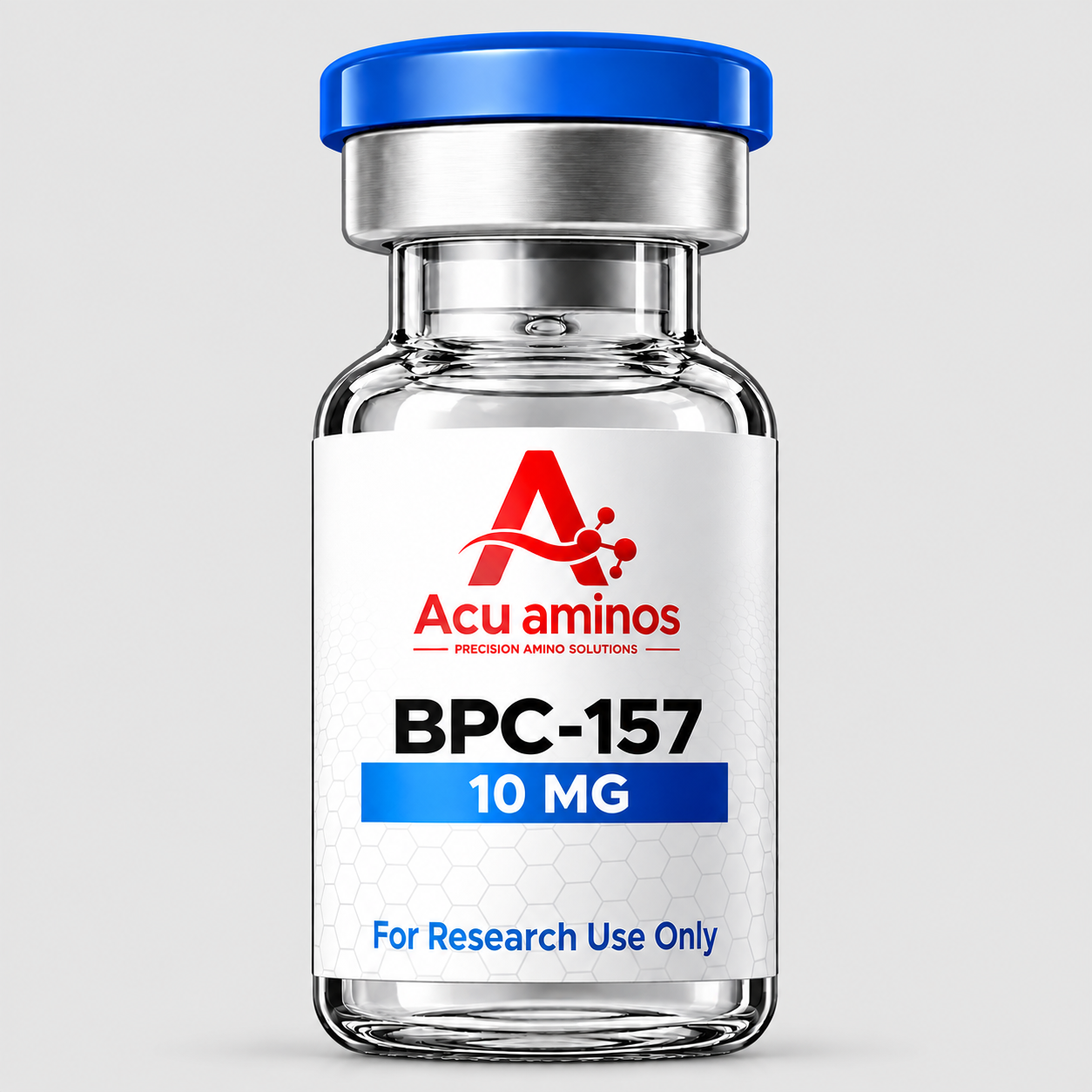
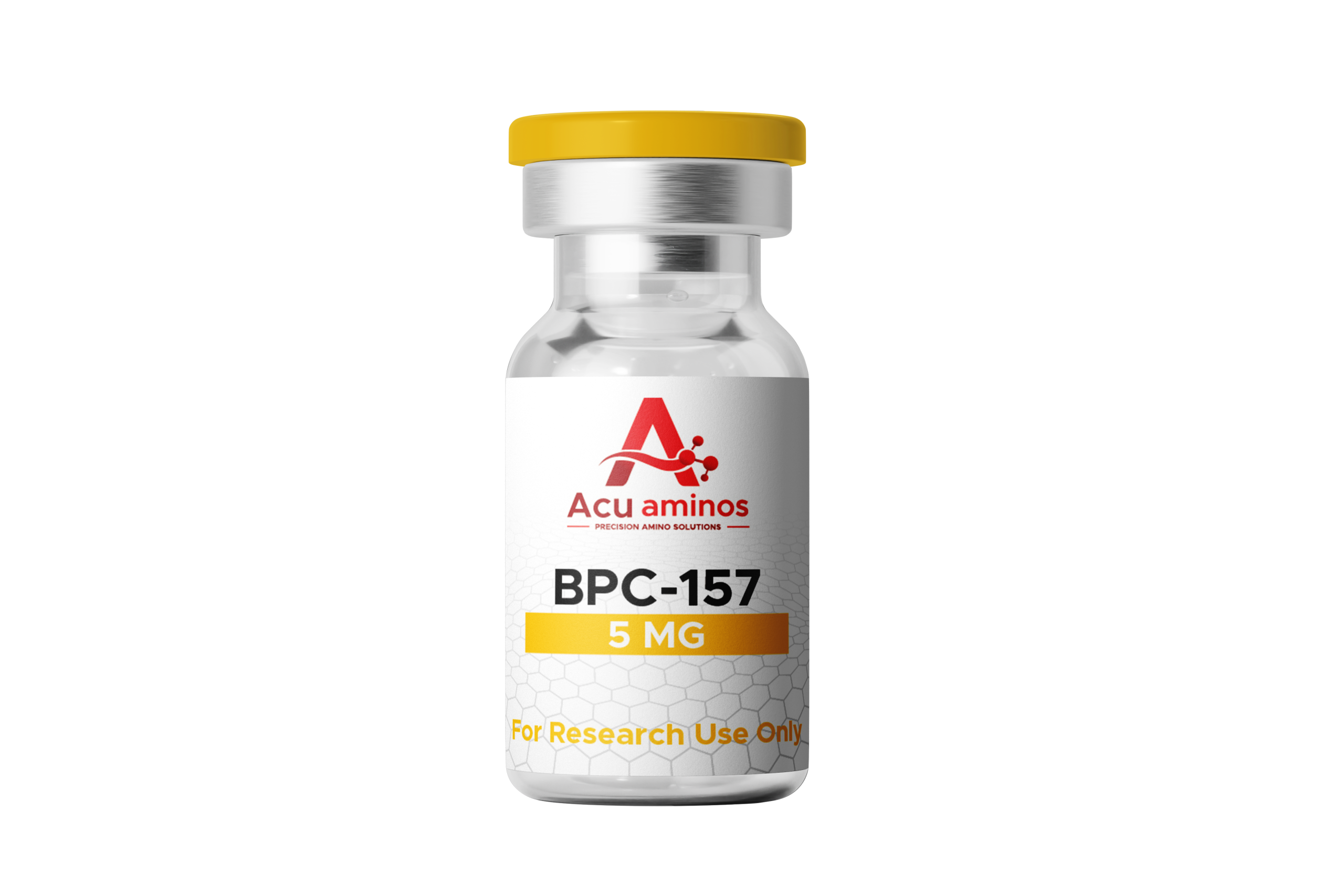
Body Protection Compound 157, a stable 15-residue fragment of a gastric juice protein (GEPPPGKPADDAGLV), lyophilized. Available in 5 mg and 10 mg vials. One of the most studied peptides in tendon, ligament and gastrointestinal tissue models. ≥99% purity. Research use only.
Overview
BPC-157 is a synthetic pentadecapeptide corresponding to a partial sequence of a protein isolated from human gastric juice. It is unusually stable in acidic environments and has been studied in a large body of preclinical literature, primarily from the University of Zagreb, in tendon, ligament, muscle, gastrointestinal and vascular tissue models.
Acu Aminos supplies BPC-157 as a lyophilized powder in 5 mg and 10 mg vials from the same lot-tested material; choose the size above.
Chemistry & specifications
BPC-157 is a linear, unmodified 15-residue peptide rich in proline (four residues) and acidic residues (Glu, two Asp). The proline-proline-proline motif restricts conformational flexibility and contributes to its reported resistance to gastric acid and peptidases. It has no cysteine, so it is not prone to oxidation or disulfide scrambling. Both the acetate and the free-base form are described in the literature; the counter-ion for each lot is stated on the COA.
| Sequence | Gly-Glu-Pro-Pro-Pro-Gly-Lys-Pro-Ala-Asp-Asp-Ala-Gly-Leu-Val |
|---|---|
| Molecular formula | C62H98N16O22 |
| Molecular weight | 1419.5 g/mol |
| CAS | 137525-51-0 |
| Net content | 5 mg or 10 mg per vial |
| Form | Lyophilized powder |
| Purity | ≥99% (HPLC) |
| Appearance | White lyophilized powder |
| Solubility | Water soluble |
| Storage | Lyophilized: −20 °C long term, 2–8 °C short term. Protect from light and moisture. |
Cellular structure & mechanism of action
No single receptor for BPC-157 has been confirmed. Published mechanisms from cell and animal models include modulation of the nitric-oxide system, up-regulation of growth-factor receptors such as VEGFR2 and activation of the FAK-paxillin pathway in fibroblasts, increased expression of early growth response genes (EGR-1) and their repressor NAB2, and effects on the dopamine and serotonin systems in neural tissue. In tendon-fibroblast culture it has been reported to increase cell survival under oxidative stress and to promote migration and outgrowth from tendon explants.
Research applications
- Tendon fibroblast and tenocyte migration and survival assays
- Nitric-oxide pathway and endothelial signaling studies
- Gastrointestinal mucosal-cell and barrier models
- Angiogenesis and VEGFR2 expression research
Selected references
- Sikiric P, Seiwerth S, Rucman R, et al. Brain-gut axis and pentadecapeptide BPC 157: theoretical and practical implications. Curr Neuropharmacol. 2016;14(8):857–865.
- Chang CH, Tsai WC, Lin MS, Hsu YH, Pang JH. The promoting effect of pentadecapeptide BPC 157 on tendon healing involves tendon outgrowth, cell survival, and cell migration. J Appl Physiol. 2011;110(3):774–780.
- Seiwerth S, Rucman R, Turkovic B, et al. BPC 157 and standard angiogenic growth factors. Curr Pharm Des. 2018;24(18):1972–1989.
References are provided to help researchers locate primary literature. Acu Aminos makes no claims about the safety or efficacy of any compound in humans or animals.
What are research peptides?
Structure
Peptides are chains of amino acids joined by amide (peptide) bonds. Short chains of 2 to roughly 50 residues are called peptides; longer chains fold into proteins. Sequence, chain length and terminal modifications define how a peptide behaves.
Synthesis & purity
Research peptides are built by solid-phase peptide synthesis, cleaved from the resin, purified by reverse-phase HPLC and lyophilized to a stable powder. Purity is reported as the HPLC area percentage of the target peak; identity is confirmed by mass spectrometry.
Laboratory use
In the lab, peptides serve as receptor ligands, enzyme substrates, signaling probes and reference standards in cell-culture, biochemical and analytical studies. Our products are supplied exclusively for these in-vitro research applications.
Handling & storage
Lyophilized peptides should be kept sealed, protected from light and moisture, and stored refrigerated or frozen for long-term stability. Allow vials to reach room temperature before opening to prevent condensation.
All information on this page is provided for educational and research reference only and does not constitute medical advice or a recommendation for use in humans or animals.
Related research peptides
-
99% Purity
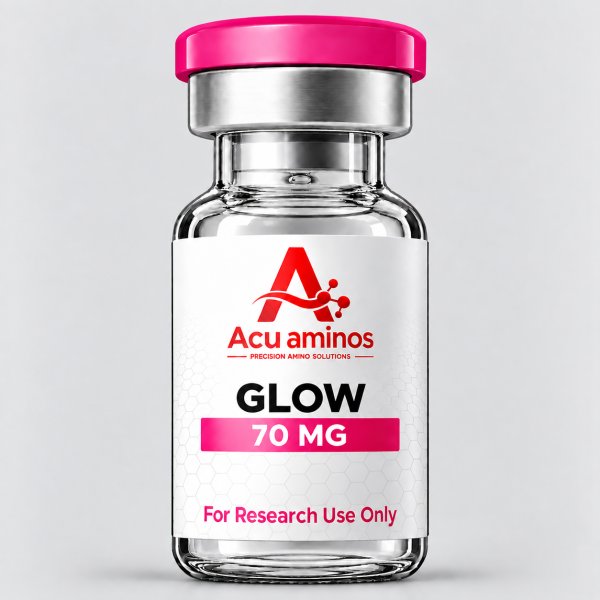 Tissue & Repair Signaling
GLOW 70mg
70 mg · GHK-Cu 50 / BPC-157 10 / TB-500 10 blend · ≥99% purity$119.99In stock -
99% Purity
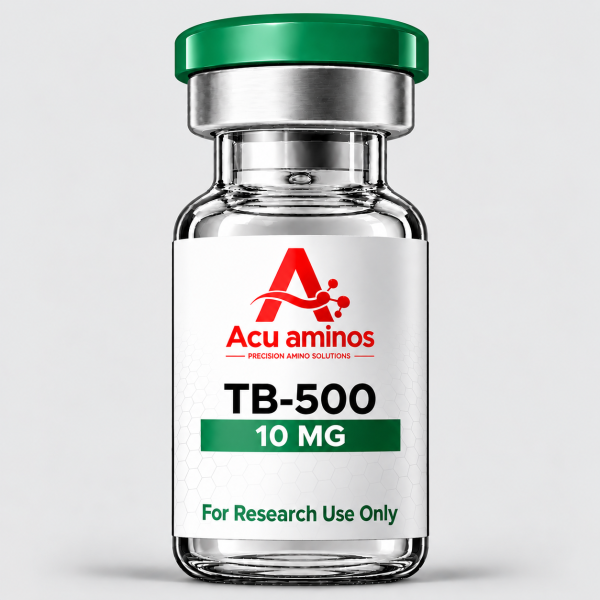 Tissue & Repair Signaling
Thymosin Beta-4 (TB-500) 10mg
10 mg · Actin-sequestering 43-aa peptide · ≥99% purity$64.99In stock