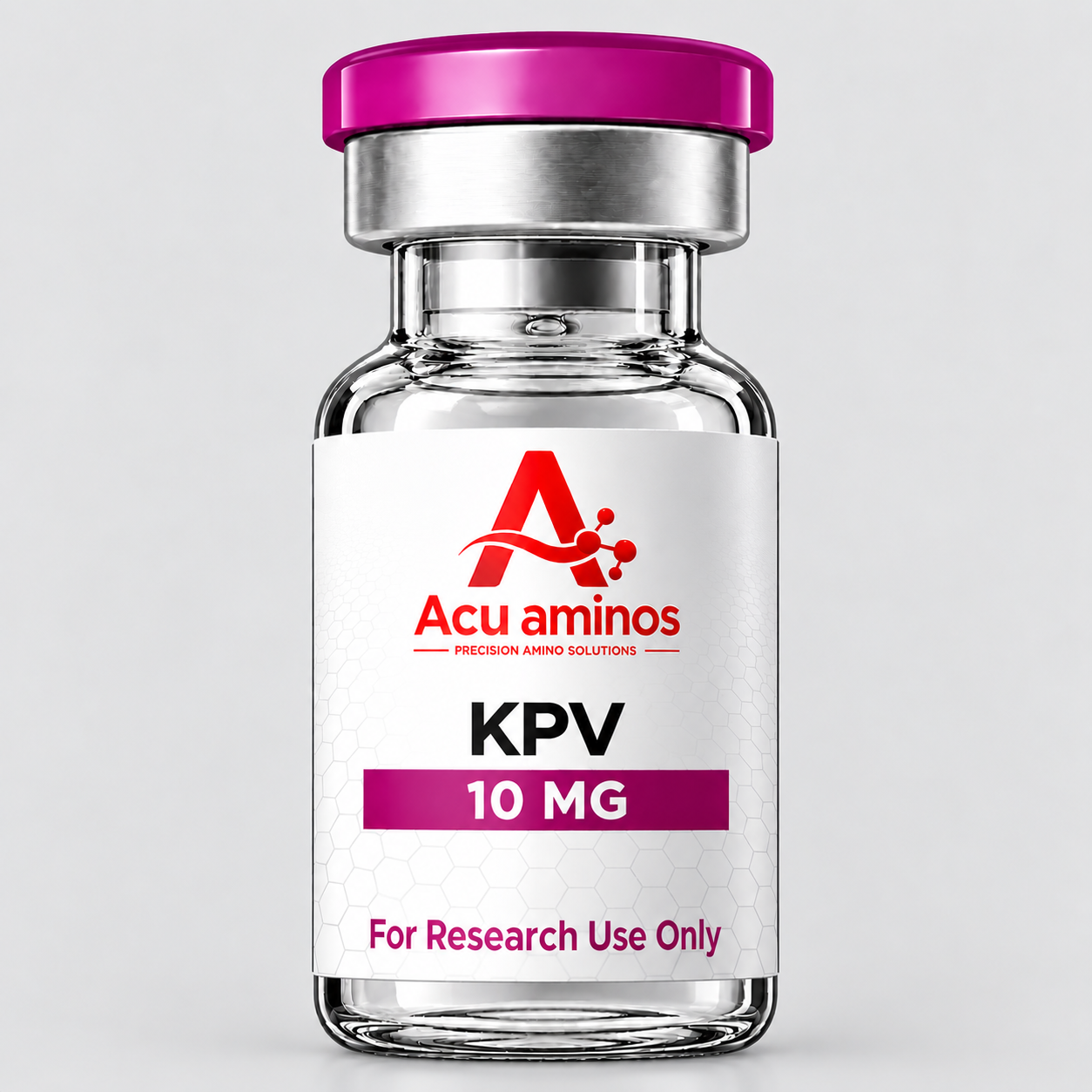
KPV 10mg
$49.99
Lys-Pro-Val, the C-terminal tripeptide of α-melanocyte-stimulating hormone, 10 mg lyophilized. Studied in NF-κB signaling, epithelial-barrier and inflammatory-model research. ≥99% purity. Research use only.
Overview
KPV is the tripeptide Lys-Pro-Val, corresponding to residues 11–13 of α-melanocyte-stimulating hormone (α-MSH). Although it lacks the core His-Phe-Arg-Trp motif required for melanocortin-receptor activation, KPV retains several of the immunomodulatory properties of the parent hormone in published cell and animal models, which has made it a popular minimal peptide for inflammation research.
Acu Aminos supplies KPV as a 10 mg lyophilized powder for laboratory use.
Chemistry & specifications
KPV is a small, linear, unmodified tripeptide. The proline residue introduces a conformational constraint, and the lysine side-chain provides a positive charge at physiological pH. Its small size allows uptake by the oligopeptide transporter PepT1, a mechanism demonstrated in intestinal epithelial cell models.
| Sequence | Lys-Pro-Val |
|---|---|
| Molecular formula | C16H30N4O4 |
| Molecular weight | 342.4 g/mol |
| CAS | 67727-97-3 |
| Net content | 10 mg per vial |
| Form | Lyophilized powder |
| Purity | ≥99% (HPLC) |
| Appearance | White lyophilized powder |
| Solubility | Water soluble |
| Storage | Lyophilized: −20 °C long term, 2–8 °C short term. Protect from light and moisture. |
Cellular structure & mechanism of action
Published in-vitro work indicates that KPV enters epithelial and immune cells via PepT1 and interferes with NF-κB activation, reducing the transcription of pro-inflammatory cytokines such as IL-6, IL-8 and TNF-α in stimulated cell lines. Because these effects occur independently of the classical melanocortin receptors, KPV is often used to dissect receptor-independent pathways of α-MSH-derived peptides. Murine colitis models have been used to study its effects on intestinal inflammation.
Research applications
- NF-κB reporter and cytokine-release assays in epithelial and macrophage lines
- PepT1 transport and intestinal-epithelial barrier models
- Melanocortin-receptor-independent signaling studies
- Experimental colitis and mucosal-inflammation research
Selected references
- Brzoska T, Luger TA, Maaser C, Abels C, Böhm M. α-Melanocyte-stimulating hormone and related tripeptides: biochemistry, antiinflammatory and protective effects in vitro and in vivo, and future perspectives for the treatment of immune-mediated inflammatory diseases. Endocr Rev. 2008;29(5):581–602.
- Kannengiesser K, Maaser C, Heidemann J, et al. Melanocortin-derived tripeptide KPV has anti-inflammatory potential in murine models of inflammatory bowel disease. Inflamm Bowel Dis. 2008;14(3):324–331.
- Dalmasso G, Charrier-Hisamuddin L, Nguyen HT, et al. PepT1-mediated tripeptide KPV uptake reduces intestinal inflammation. Gastroenterology. 2008;134(1):166–178.
References are provided to help researchers locate primary literature. Acu Aminos makes no claims about the safety or efficacy of any compound in humans or animals.
What are research peptides?
Structure
Peptides are chains of amino acids joined by amide (peptide) bonds. Short chains of 2 to roughly 50 residues are called peptides; longer chains fold into proteins. Sequence, chain length and terminal modifications define how a peptide behaves.
Synthesis & purity
Research peptides are built by solid-phase peptide synthesis, cleaved from the resin, purified by reverse-phase HPLC and lyophilized to a stable powder. Purity is reported as the HPLC area percentage of the target peak; identity is confirmed by mass spectrometry.
Laboratory use
In the lab, peptides serve as receptor ligands, enzyme substrates, signaling probes and reference standards in cell-culture, biochemical and analytical studies. Our products are supplied exclusively for these in-vitro research applications.
Handling & storage
Lyophilized peptides should be kept sealed, protected from light and moisture, and stored refrigerated or frozen for long-term stability. Allow vials to reach room temperature before opening to prevent condensation.
All information on this page is provided for educational and research reference only and does not constitute medical advice or a recommendation for use in humans or animals.
Related research peptides
-
99% Purity
 Tissue & Repair Signaling
GLOW 70mg
70 mg · GHK-Cu 50 / BPC-157 10 / TB-500 10 blend · ≥99% purity$119.99In stock -
99% Purity
 Immune & Neuro Peptides
Pinealon 20mg
20 mg · Glu-Asp-Arg bioregulator tripeptide · ≥99% purity$59.99In stock -
99% Purity
 Tissue & Repair Signaling
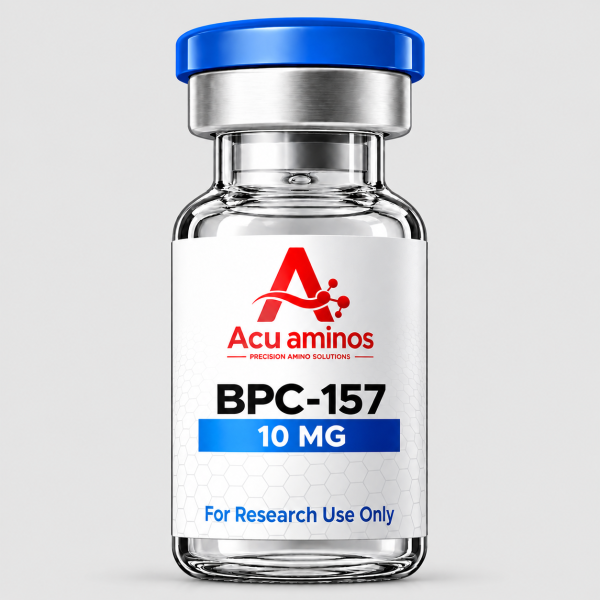
BPC-157
5 mg or 10 mg · Gastric pentadecapeptide · ≥99% purityFrom $52.99In stockChoose size This product has multiple variants. The options may be chosen on the product page