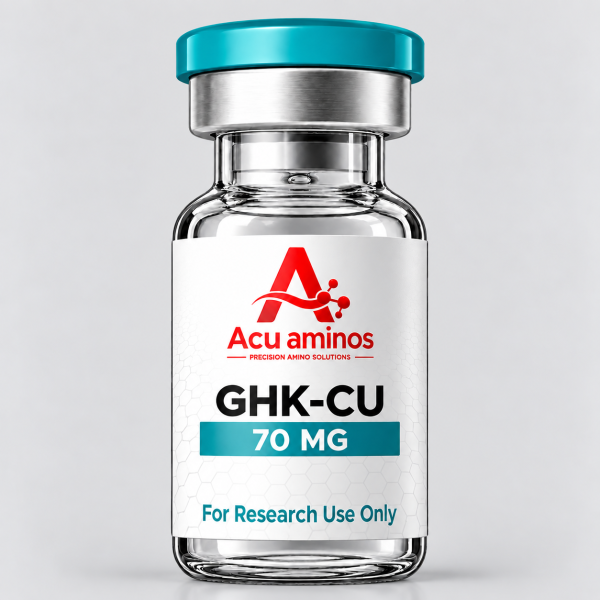
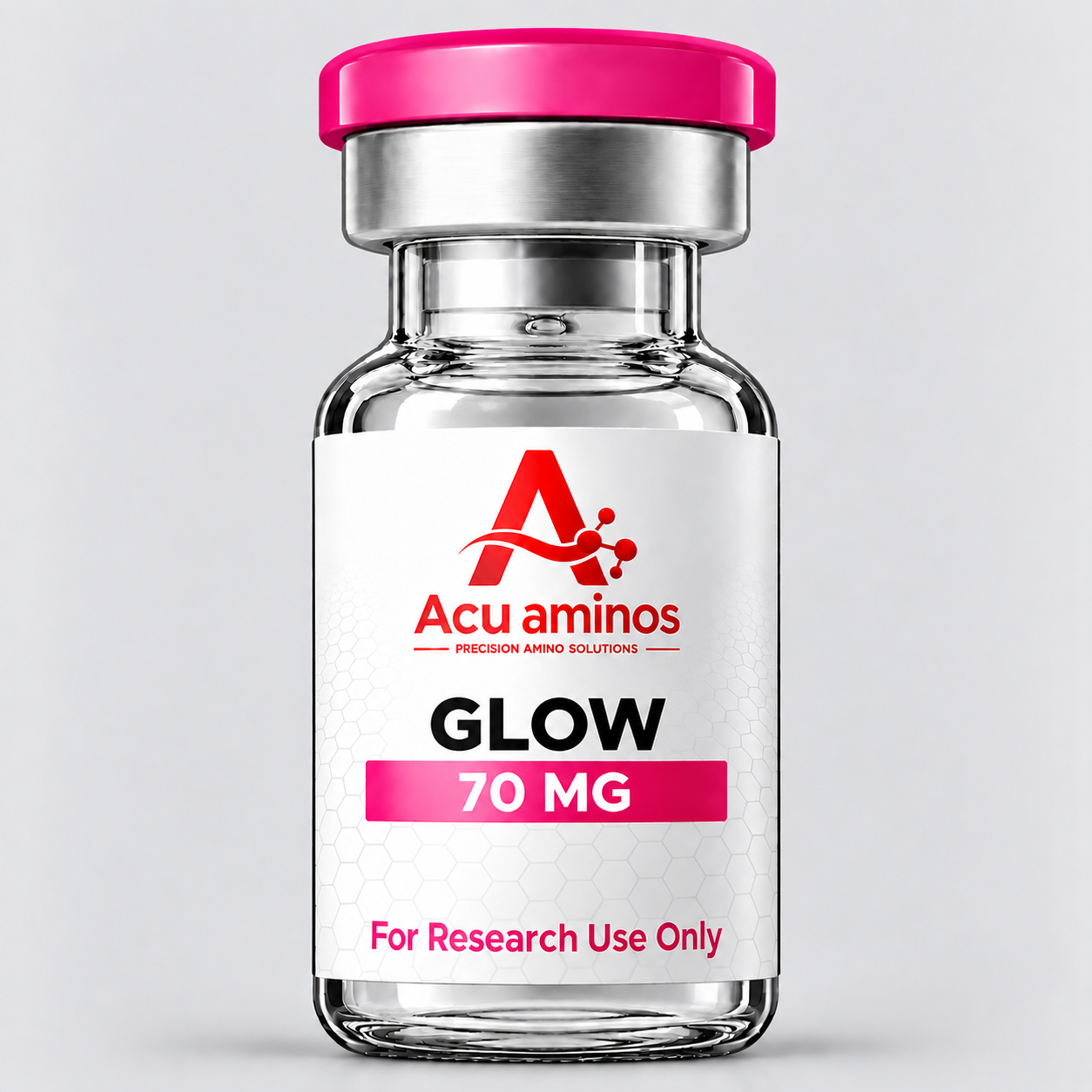
GLOW 70mg
$119.99
Three-peptide research blend in a single lyophilized vial: GHK-Cu 50 mg, BPC-157 10 mg and TB-500 (Thymosin β4) 10 mg. For laboratories studying the combined signaling of copper-tripeptide, pentadecapeptide and actin-sequestering peptides in tissue models. ≥99% purity per component. Research use only.
Overview
GLOW is a co-lyophilized blend of three of the most studied tissue-signaling peptides: the copper tripeptide GHK-Cu, the gastric pentadecapeptide BPC-157, and Thymosin β4 (TB-500). Each is a well-characterized research compound in its own right; the blend exists so that laboratories comparing single-agent and combined signaling in extracellular-matrix, fibroblast and cell-migration models can work from a single reference vial with one lot COA.
Acu Aminos supplies GLOW as a 70 mg lyophilized powder (50 / 10 / 10 mg). Individual vials of GHK-Cu, BPC-157 and TB-500 are also available.
Chemistry & specifications
GHK-Cu (Gly-His-Lys · Cu²⁺, ≈403.9 g/mol) is a copper chelate that delivers copper to cuproenzymes and interacts with proteoglycans. BPC-157 (GEPPPGKPADDAGLV, 1419.5 g/mol) is a stable, proline-rich 15-residue fragment of a gastric protein. Thymosin β4 (43 residues, ≈4963 g/mol) is the principal G-actin-sequestering peptide in mammalian cells. All three are water soluble and are co-lyophilized without excipients; the lot COA reports HPLC purity for each component.
| Components | GHK-Cu 50 mg + BPC-157 10 mg + Thymosin β4 (TB-500) 10 mg |
|---|---|
| Net content | 70 mg per vial |
| Form | Lyophilized powder |
| Purity | ≥99% (HPLC) per component |
| Appearance | Pale blue to off-white lyophilized powder |
| Solubility | Water soluble |
| Storage | Lyophilized: −20 °C long term, 2–8 °C short term. Protect from light and moisture. |
Cellular structure & mechanism of action
The three components act through distinct mechanisms that are frequently studied together. GHK-Cu has been reported to modulate collagen, glycosaminoglycan and metalloproteinase gene expression and to act as a chemoattractant for fibroblasts and immune cells in vitro. BPC-157 has been reported to influence the nitric-oxide system, VEGFR2 signaling and fibroblast migration in cell and animal models. Thymosin β4 sequesters monomeric actin, promotes endothelial and keratinocyte migration, and activates ILK/Akt signaling in cardiac and epithelial cells. Combined studies examine whether matrix-remodeling, angiogenic and cytoskeletal signals are additive in wound-model and tissue-culture systems.
Research applications
- Fibroblast and keratinocyte migration (scratch) assays, single agent vs. blend
- Extracellular-matrix synthesis and MMP/TIMP balance studies
- Angiogenesis and endothelial tube-formation models
- Multi-peptide signaling and combination-effect research
Selected references
- Pickart L, Margolina A. Regenerative and protective actions of the GHK-Cu peptide in the light of the new gene data. Int J Mol Sci. 2018;19(7):1987.
- Seiwerth S, Rucman R, Turkovic B, et al. BPC 157 and standard angiogenic growth factors. Gastrointestinal tract healing, lessons from tendon, ligament, muscle and bone healing. Curr Pharm Des. 2018;24(18):1972–1989.
- Goldstein AL, Hannappel E, Kleinman HK. Thymosin β4: actin-sequestering protein moonlights to repair injured tissues. Trends Mol Med. 2005;11(9):421–429.
References are provided to help researchers locate primary literature. Acu Aminos makes no claims about the safety or efficacy of any compound in humans or animals.
What are research peptides?
Structure
Peptides are chains of amino acids joined by amide (peptide) bonds. Short chains of 2 to roughly 50 residues are called peptides; longer chains fold into proteins. Sequence, chain length and terminal modifications define how a peptide behaves.
Synthesis & purity
Research peptides are built by solid-phase peptide synthesis, cleaved from the resin, purified by reverse-phase HPLC and lyophilized to a stable powder. Purity is reported as the HPLC area percentage of the target peak; identity is confirmed by mass spectrometry.
Laboratory use
In the lab, peptides serve as receptor ligands, enzyme substrates, signaling probes and reference standards in cell-culture, biochemical and analytical studies. Our products are supplied exclusively for these in-vitro research applications.
Handling & storage
Lyophilized peptides should be kept sealed, protected from light and moisture, and stored refrigerated or frozen for long-term stability. Allow vials to reach room temperature before opening to prevent condensation.
All information on this page is provided for educational and research reference only and does not constitute medical advice or a recommendation for use in humans or animals.
Related research peptides
-
99% Purity
 Tissue & Repair Signaling
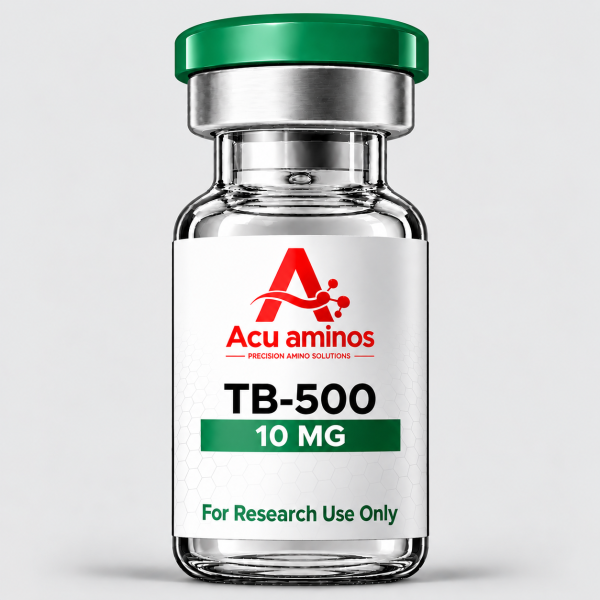
Thymosin Beta-4 (TB-500) 10mg
10 mg · Actin-sequestering 43-aa peptide · ≥99% purity$64.99In stock -
99% Purity
 Tissue & Repair Signaling
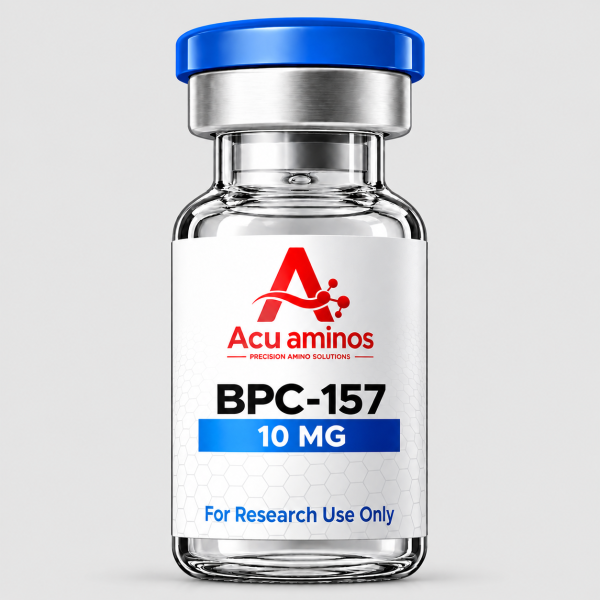
BPC-157
5 mg or 10 mg · Gastric pentadecapeptide · ≥99% purityFrom $52.99In stockChoose size This product has multiple variants. The options may be chosen on the product page