
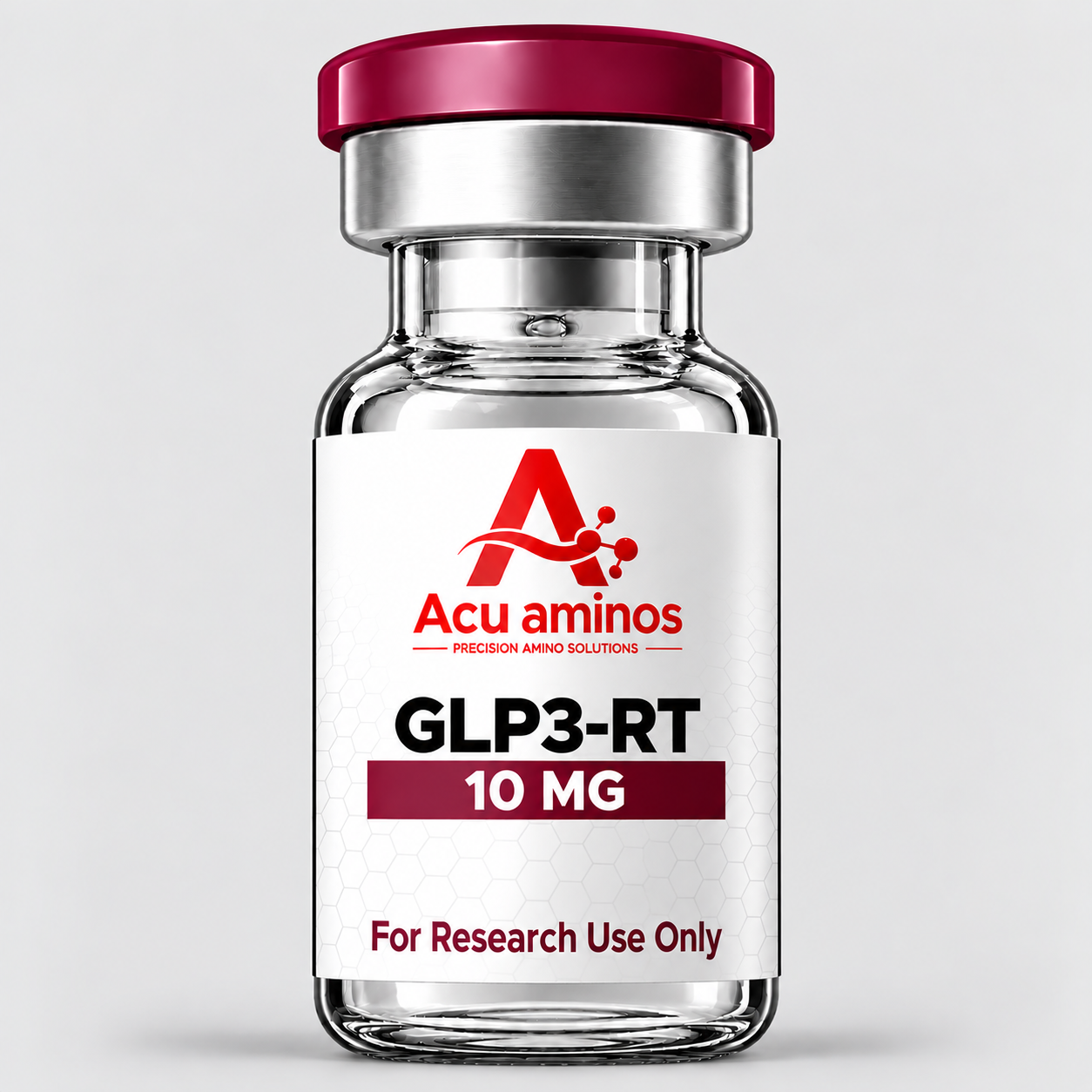
Retatrutide
From $109.99
LY3437943, an engineered 39-residue lipidated peptide with agonist activity at GIP, GLP-1 and glucagon receptors, lyophilized. Available in 15 mg and 40 mg vials for incretin-receptor pharmacology and metabolic-signaling research. ≥99% purity. Research use only.
Overview
Retatrutide (LY3437943) is a synthetic single-chain peptide engineered from the glucose-dependent insulinotropic polypeptide (GIP) scaffold to activate three receptors: the GIP receptor, the GLP-1 receptor and the glucagon receptor. It is one of the most-cited compounds in current incretin-biology literature and is frequently used as a reference triple agonist in receptor-pharmacology research.
Acu Aminos supplies Retatrutide as a lyophilized powder in 15 mg and 40 mg vials from the same lot-tested material; choose the size above. The 40 mg vial suits laboratories running extended experiment series that want to minimize lot-to-lot variability.
Chemistry & specifications
Retatrutide is a 39-amino-acid peptide containing two α-aminoisobutyric acid (Aib) substitutions for protease resistance and a C20 fatty-diacid moiety attached through a linker to a lysine side chain. The lipid promotes albumin binding, which extends the peptide’s half-life in biological systems. Sequence elements from GIP, GLP-1 and glucagon were balanced during discovery to tune relative potency at each receptor.
| Designation | LY3437943 |
|---|---|
| Length | 39 amino acids, lipidated (C20 diacid) |
| Molecular formula | C221H342N46O68 |
| Molecular weight | ≈4731 g/mol |
| CAS | 2381089-83-2 |
| Net content | 15 mg or 40 mg per vial |
| Form | Lyophilized powder |
| Purity | ≥99% (HPLC) |
| Appearance | White lyophilized powder |
| Storage | Lyophilized: −20 °C long term, 2–8 °C short term. Protect from light and moisture. |
Cellular structure & mechanism of action
All three target receptors are class B G-protein-coupled receptors that signal primarily through Gαs, raising intracellular cAMP and activating PKA and Epac pathways. In cell-based assays, Retatrutide displays full or near-full agonism at GIPR and GLP-1R and partial-to-full agonism at GCGR, with reported potencies characterized in the discovery publication. The combination is studied for how simultaneous engagement of the three receptors alters downstream signaling in pancreatic, hepatic and adipose cell models relative to single- or dual-agonist reference peptides.
Research applications
- GIPR, GLP-1R and GCGR cAMP-accumulation and β-arrestin recruitment assays
- Receptor selectivity and biased-agonism comparisons
- Islet, hepatocyte and adipocyte signaling models
- Lipidated-peptide albumin-binding and stability studies
Selected references
- Coskun T, Urva S, Roell WC, et al. LY3437943, a novel triple glucagon, GIP, and GLP-1 receptor agonist for glycemic control and weight loss: from discovery to clinical proof of concept. Cell Metab. 2022;34(9):1234–1247.
- Jastreboff AM, Kaplan LM, Frías JP, et al. Triple-hormone-receptor agonist retatrutide for obesity: a phase 2 trial. N Engl J Med. 2023;389(6):514–526.
References are provided to help researchers locate primary literature. Acu Aminos makes no claims about the safety or efficacy of any compound in humans or animals.
What are research peptides?
Structure
Peptides are chains of amino acids joined by amide (peptide) bonds. Short chains of 2 to roughly 50 residues are called peptides; longer chains fold into proteins. Sequence, chain length and terminal modifications define how a peptide behaves.
Synthesis & purity
Research peptides are built by solid-phase peptide synthesis, cleaved from the resin, purified by reverse-phase HPLC and lyophilized to a stable powder. Purity is reported as the HPLC area percentage of the target peak; identity is confirmed by mass spectrometry.
Laboratory use
In the lab, peptides serve as receptor ligands, enzyme substrates, signaling probes and reference standards in cell-culture, biochemical and analytical studies. Our products are supplied exclusively for these in-vitro research applications.
Handling & storage
Lyophilized peptides should be kept sealed, protected from light and moisture, and stored refrigerated or frozen for long-term stability. Allow vials to reach room temperature before opening to prevent condensation.
All information on this page is provided for educational and research reference only and does not constitute medical advice or a recommendation for use in humans or animals.
Related research peptides
-
99% Purity
 Growth Hormone Secretagogues
CJC-1295 / Ipamorelin 10mg
10 mg · CJC-1295 (no DAC) 5 mg + Ipamorelin 5 mg · ≥99% purity$84.99In stock -
99% Purity
 Mitochondrial & Longevity
SS-31 10mg
10 mg · Mitochondria-targeted tetrapeptide · ≥99% purity$74.99In stock -
99% Purity
 Tissue & Repair Signaling
BPC-157
5 mg or 10 mg · Gastric pentadecapeptide · ≥99% purityFrom $52.99In stockChoose size This product has multiple variants. The options may be chosen on the product page -
99% Purity
 Metabolic & Incretin Peptides
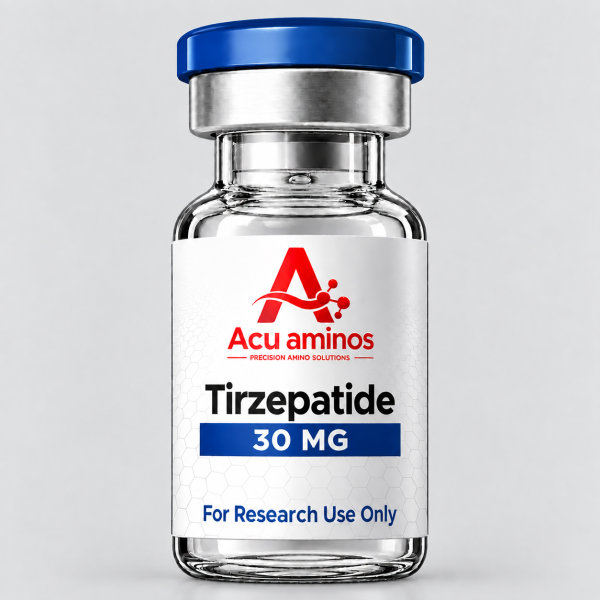
Tirzepatide 30mg
30 mg · Dual GIP/GLP-1 receptor agonist · ≥99% purity$139.99In stock